|
|
'Natural Selection'
Ecological
model
This installation is based on the listening ecology found in the model
of female frog mate selection within a calling male frog chorus.
Through a study of current research into the mating of frogs we have
found that female frogs select a mate from within the male frog chorus
according to the temporal and spectral characteristics of their calls.
Through our research we have found that the male frogs calls have four
main characteristics, dominant call frequency (pitch of the call),
pulse rate of the call, call rate (how often they call) and call
duration (how long they call for).
This installation is based on a simple model of the interactions found
between the male frogs in the chorus with the user taking on the role
of the female as a perceiver embodied within the sonic environment.
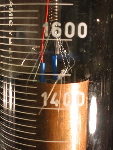
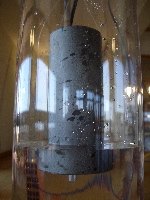
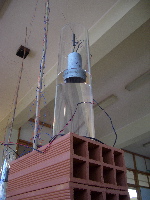
Each male frog is represented by a ‘sound object’,
which is simply a resonator excited by a motor. These sound objects
have been designed to represent the four main characteristics of the
male frogs call: the size of the resonator being linked to the dominant
call frequency of the frog; the pulse rate is variable dependent on
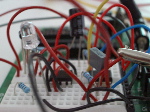
lighting conditions; each frog is fitted with a light sensor the output
of which is affected by a users locality causing disturbances to the
light source; the call duration is fixed but different for each frog.
|
|
|
|
The
Algorithm
The rules that govern the local interactions between the males are
based on research that suggests that female frogs prefer 'leading
males', i.e. males that are perceived by the female to be calling in
front of the other frogs. To produce this effect the male frogs listen
to their nearest neighbours (the others being masked by the noise of
the chorus) and consciously alter their call rate so as not to coincide
with other males. To model this interaction each frog has a set call
rate which is modified through the application of an algorithm based on
a resettable oscillator. Each of the frogs is wired to its two nearest
neighbours to resemble the listening conditions in the wild, if a frog
'hears' a neighbour making its call, by virtue of receiving a current
down a wire it resets its oscillator to 1 thus inhibiting its own call
and lengthening or shortening its own call rate. The local interaction
between the male frogs is our algorithmic structure that has been set
up to exhibit emergent results. The temporal sonic form of the piece is
not only governed by the frogs own set call rate but by the
interactions of the frogs with their nearest neighbours.
|
|